材料組織高精度予測によるマテリアルDXの実現を目的とし,実験と大規模計算を融合するデータサイエンスを研究テーマとしています. 現在,合金材料の凝固組織を決定する樹枝状デンドライト結晶の成長過程を対象に,phase-field法とデータ同化を用いた研究に取り組んでいます.
With the goal of achieving digital transformation of materials through accurate prediction of their microstructures, I study data science that integrates experiments and high-performance simulations. I am currently working on research using the phase-field method and data assimilation, focusing on the dendritic growth process that governs the solidification microstructures of metallic alloys.
ハイライト(更新予定)
Highlights (updates planned)
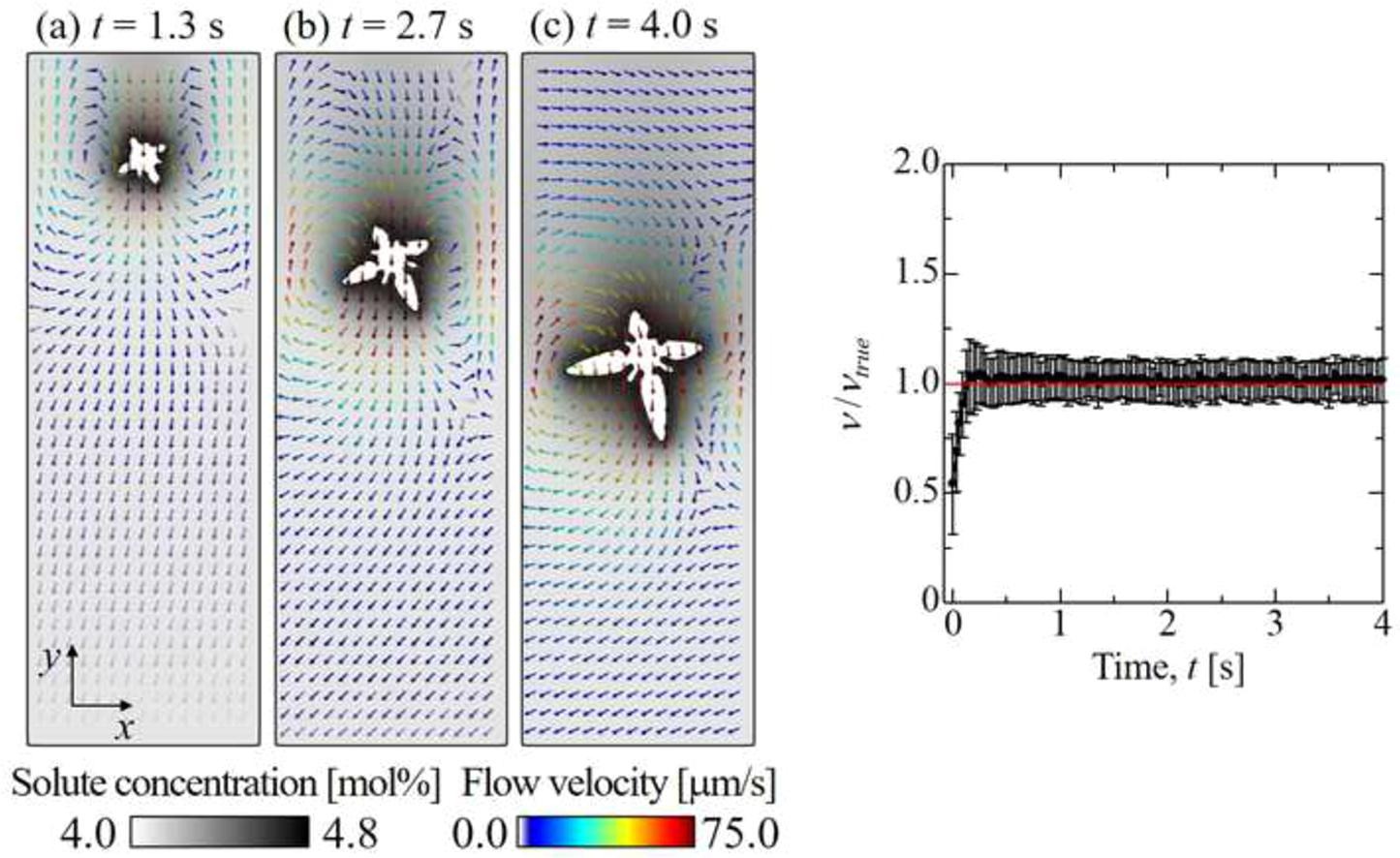
- 凝固中に液相内を運動する等軸デンドライトを対象に,データ同化システムを構築しました.実際の実験結果の代わりに数値計算結果を観測データとして用いて(双子実験),デンドライト形態の時系列データから液相の動粘性係数ν などの物性値を推定できることを確認し,ハイパーパラメータの推定精度への影響を評価しました.
- We developed a data assimilation system for equiaxed dendrites moving within the liquid phase during solidification. Using numerical simulation outputs as observation data in lieu of experimental measurements (twin experiments), we confirmed that material properties such as kinematic viscosity ν can be estimated from time-series morphological data.
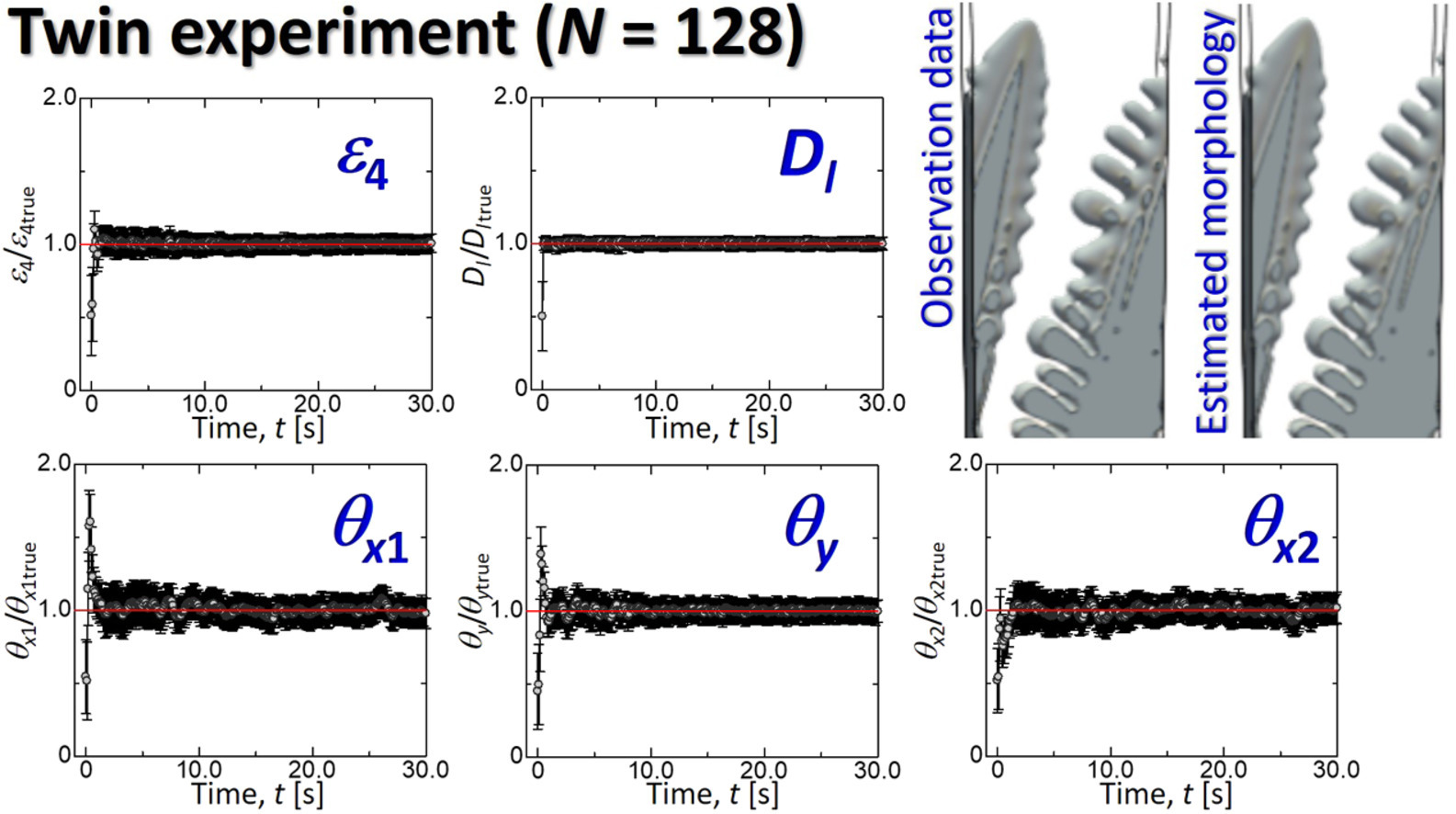
- 柱状デンドライト成長を対象に,双子実験を通してデータ同化システムを詳細に評価し,複数の物性値と結晶方位を同時推定できることを確認しました.計算負荷が大きくなる(N = 128のphase-field計算を同時に実行)ため,計算コスト低減方法を検討し,またボクセルデータおよび低解像度データを用いたデータ同化を検討しました.
- Focusing on columnar dendrites that typically grow from casting walls, we conducted a detailed evaluation of the data assimilation system through twin experiments. Because the computational burden is substantial (requiring N = 128 phase-field simulations), we investigated strategies for cost reduction and explored data assimilation using voxel data and low-resolution data.
![[graphical abstract]](img/1-s2.0-S0264127526004132-ga1_lrg.jpg)
![[graphical abstract]](img/111_TETSU-2024-126.jpg)